
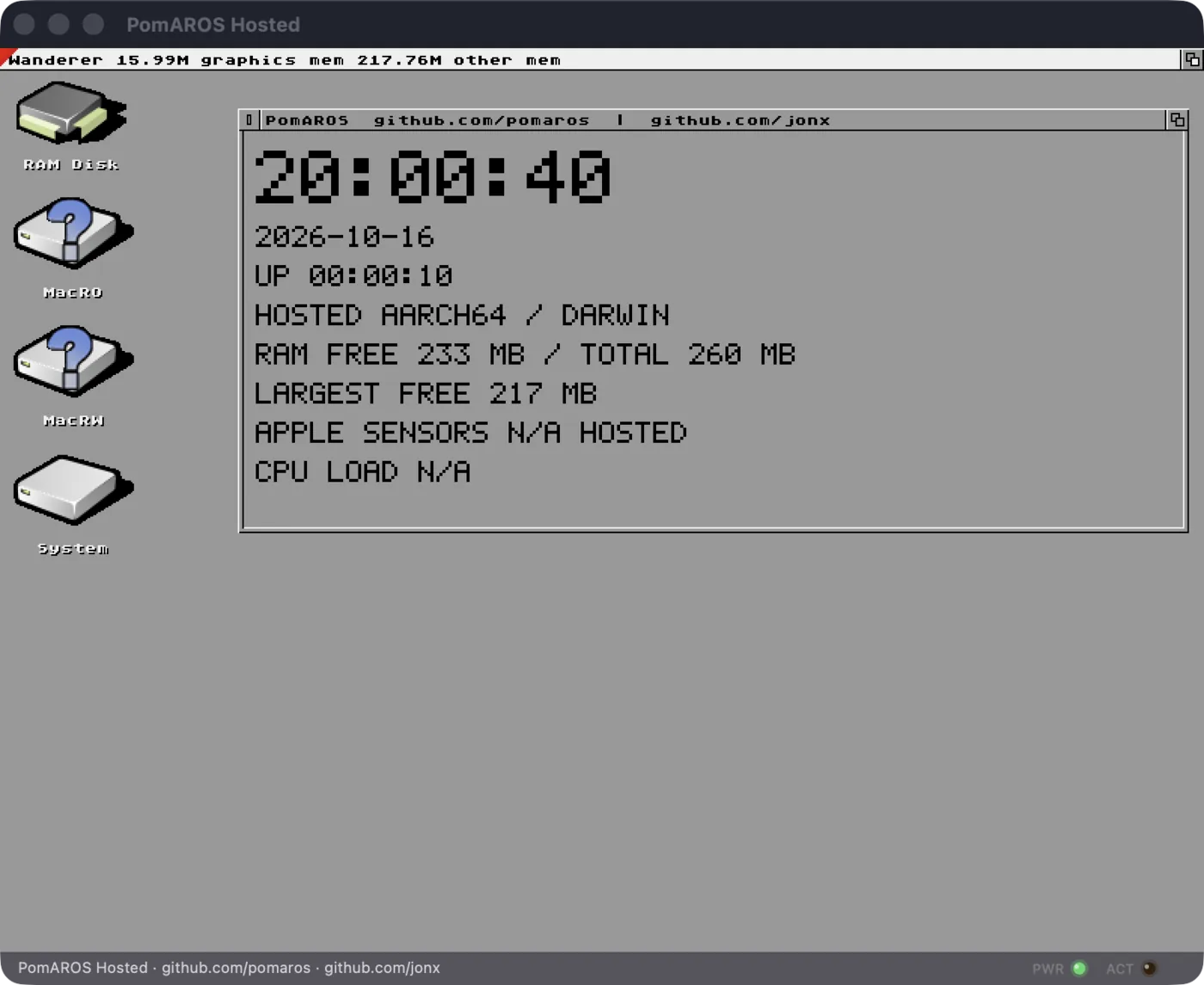
Available today
Pick your PomAROS.
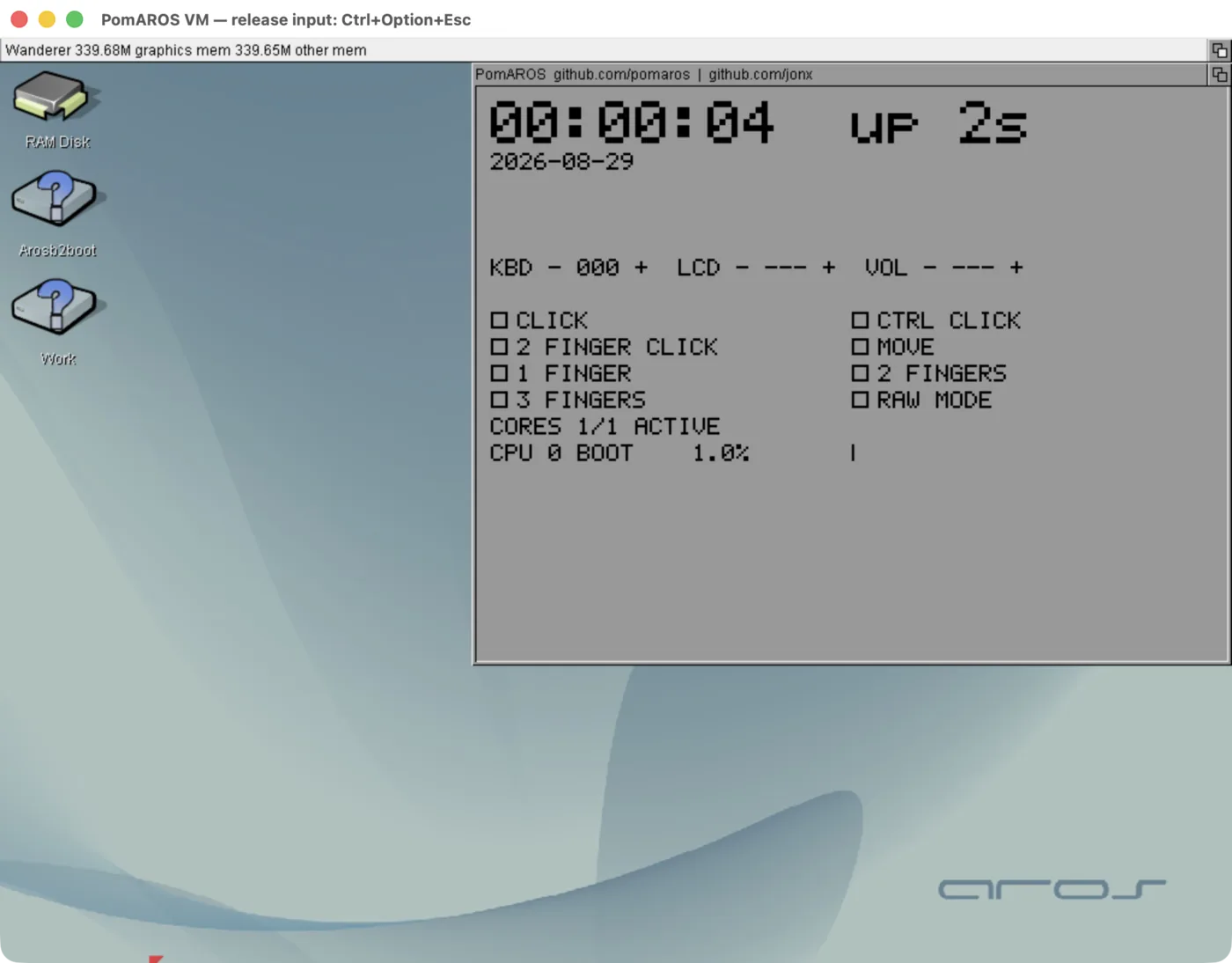
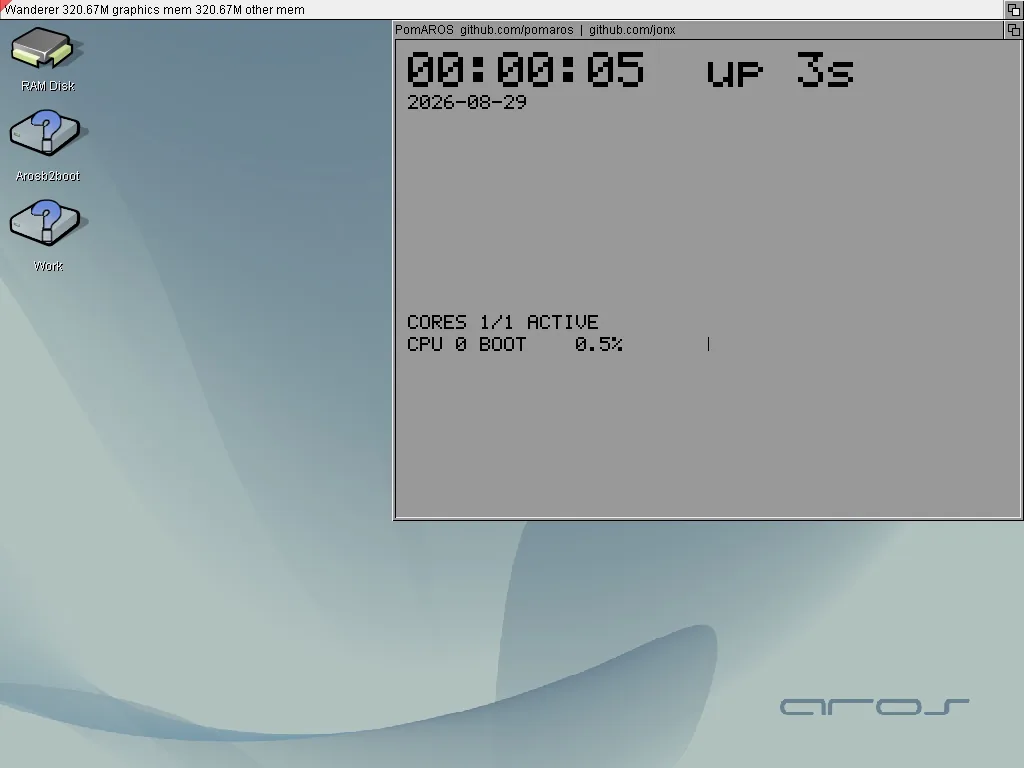
All three run the same AROS, built from the same shared sources, on any Mac with Apple Silicon. They differ in how AROS meets macOS.
Which one?
Not sure? Start with the VM.
It is a single download, it needs nothing else, and it gives you a whole AROS machine you cannot break your Mac with.
Hosted is the closest to a Mac app: AROS opens your Mac files directly and plays through your Mac's speakers.
VM is a separate machine with its own disk, that still shares files and the clipboard with macOS.
QEMU is for people who want QEMU's tools and options. It shares the guest with the VM.
And if you would rather have AROS with no macOS underneath at all, native PomAROS is coming.
Open source
Built in the open.
Every port pins the exact revision of the shared AROS core it was built from, a fork that keeps the official AROS history. Each release ships its sources and the instructions to rebuild it.
These are previews, not finished releases: each repository lists what is measured and what is still missing. Bug reports and pull requests are welcome there, and general AROS improvements go upstream to the AROS project.